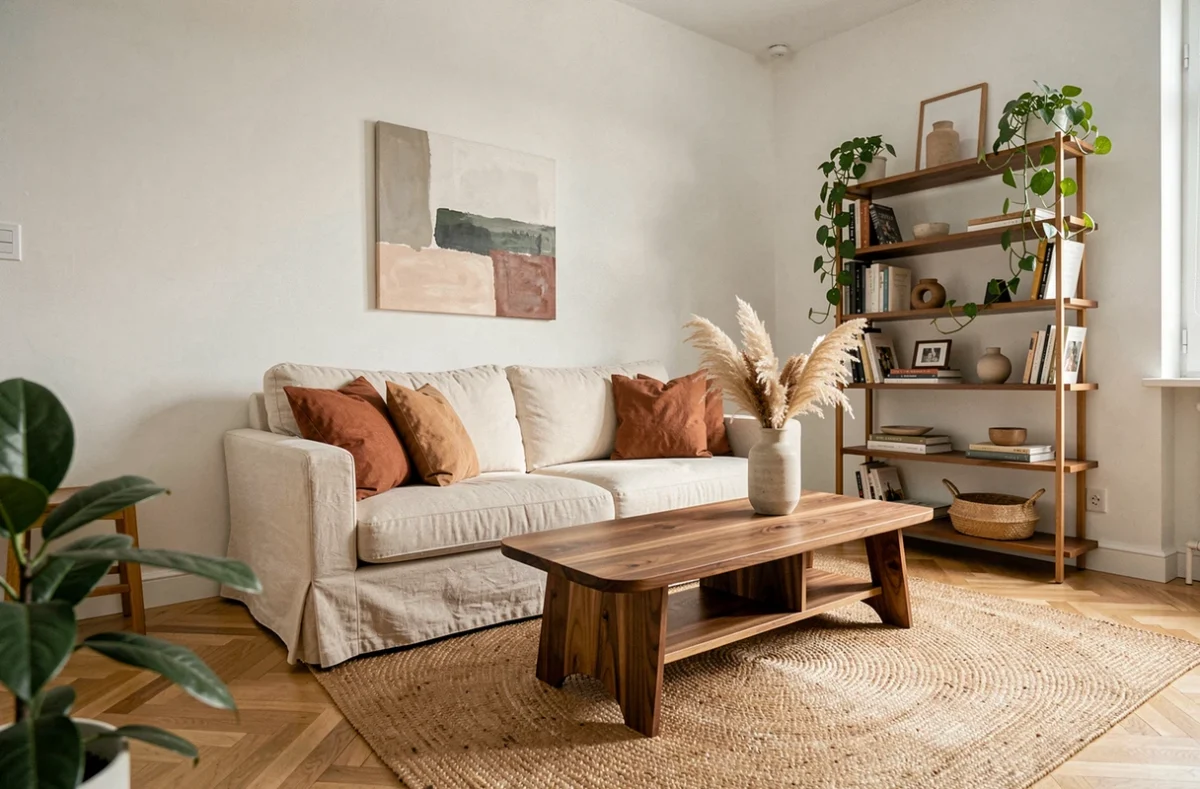
Transforming a home with style involves choosing between decorative levers whose visual impact, cost, and durability vary significantly. Paint, flooring, lighting, textiles: each aspect of interior decoration affects the ambiance of a room differently. Comparing these levers based on concrete criteria allows you to target decor ideas that produce a real change, rather than spreading a budget over barely noticeable modifications.
Visual Impact, Budget, and Durability: Comparison of Home Decor Levers
The table below summarizes the main aspects of transforming an interior according to three criteria: the immediate perception of change, the level of investment, and the longevity of the result.
| Decor Lever | Visual Impact | Relative Budget | Estimated Durability |
|---|---|---|---|
| Wall Paint (colors, accent wall) | Very High | Low to Moderate | Medium (repainted every 5-7 years) |
| Flooring (parquet, tiles) | High | High | Long (over 15 years) |
| Lighting and Fixtures | High | Moderate | Long |
| Textiles (curtains, cushions, rugs) | Moderate | Low | Short (frequent renewal) |
| Storage Furniture or Centerpieces | High | Moderate to High | Long |
| Decorative Objects and Accessories | Low to Moderate | Low | Variable |
Wall paint stands out as the lever with the best ratio of visual impact per euro spent. Changing the color of a living room or creating an accent wall radically alters the atmosphere of a space without heavy intervention.
On the other hand, decorative objects alone – candles, vases, frames – produce a noticeable effect mainly when they fit into a style coherence already established by the walls, flooring, or lighting. Accumulating them without this foundation rarely yields the expected result.
To explore ranges that combine several of these levers in a coherent approach, Cherry Déco’s home solutions cover both furniture and interior decoration accessories.
Indoor Air Quality: The Invisible Criterion of Decorative Finishes
Most decor inspiration articles overlook a parameter that conditions the real comfort of an interior: the emissions of volatile organic compounds from finishes. Paints, glues, particle boards, and certain flooring materials release VOCs for weeks, sometimes months after installation.
This criterion changes the game when choosing a paint or wall covering. Natural or low-emission paints are an alternative to more emissive products, without sacrificing color palette or durability.
Criteria to Check Before Buying Paint or Panels
- The French health label (ranking A+ to C) indicates the level of emissions in indoor air. Always prioritize products rated A+
- The composition: water-based paints generally emit less VOCs than formulations based on organic solvents
- The presence of environmental labels (European Ecolabel, NF Environment) that regulate both emissions and the production cycle
Integrating this filter right from the selection of materials avoids the need to ventilate a home intensively for weeks after decorative work. A well-decorated but poorly ventilated interior after work degrades comfort instead of improving it.
Reuse and Upcycled Materials: A Distinctive Decor Style
Reuse in decoration is no longer limited to hunting for an old piece of furniture for economic reasons. Industry players are now working to make recovered or upcycled materials desirable enough to fit into contemporary projects. The result: unique pieces that add character without resorting to new items.
In practical terms, this translates to treated reclaimed wood tabletops, old cement tiles repositioned as kitchen backsplashes, or lighting fixtures made from repurposed industrial elements. Reuse is becoming a design axis in its own right, not an aesthetic compromise.
Where to Find Reused Materials for Interior Decor
Resource centers and platforms specializing in the reuse of construction materials offer lots of tiles, flooring, woodwork, and antique hardware. Professional flea markets and furniture auctions also remain reliable sources for character pieces.
The price gap with new items varies significantly depending on the condition and rarity of the material. An old solid oak floor, for example, can cost as much or even more than new when it is sought after. Conversely, mismatched tiles can be negotiated at a fraction of the catalog price.
Decor Ideas and Regulatory Constraints: What the DPE Changes for Interior Renovation
Starting a decor transformation in an energy-intensive home without considering the regulatory timeline of the energy performance diagnosis can lead to double work. In mainland France, homes rated G no longer meet the minimum performance level required for rental. Class F will follow in the coming years.
This timeline has a direct impact on interior decoration choices. Completely repainting and replacing the flooring of a home rated F or G before addressing insulation risks having to redo the finishes after energy work.
Prioritizing Work According to DPE Rating
For a home rated E or better, purely decorative work can be undertaken without particular constraints. For classes F and G, the recommended sequence places insulation (walls, attics, windows) and heating systems before any intervention on finishes.
Decoration alone is generally not eligible for renovation aid. Decorative painting, changing flooring for personal preference, or aesthetic kitchen renovations do not automatically qualify for a tax advantage. Assistance targets energy performance and housing adaptation, not beautification.
Cross-referencing the energy diagnosis of the home with the decor project helps avoid additional costs related to finishing work after insulation. This is a consideration rarely mentioned in inspiration guides, but it determines the financial relevance of any interior transformation.