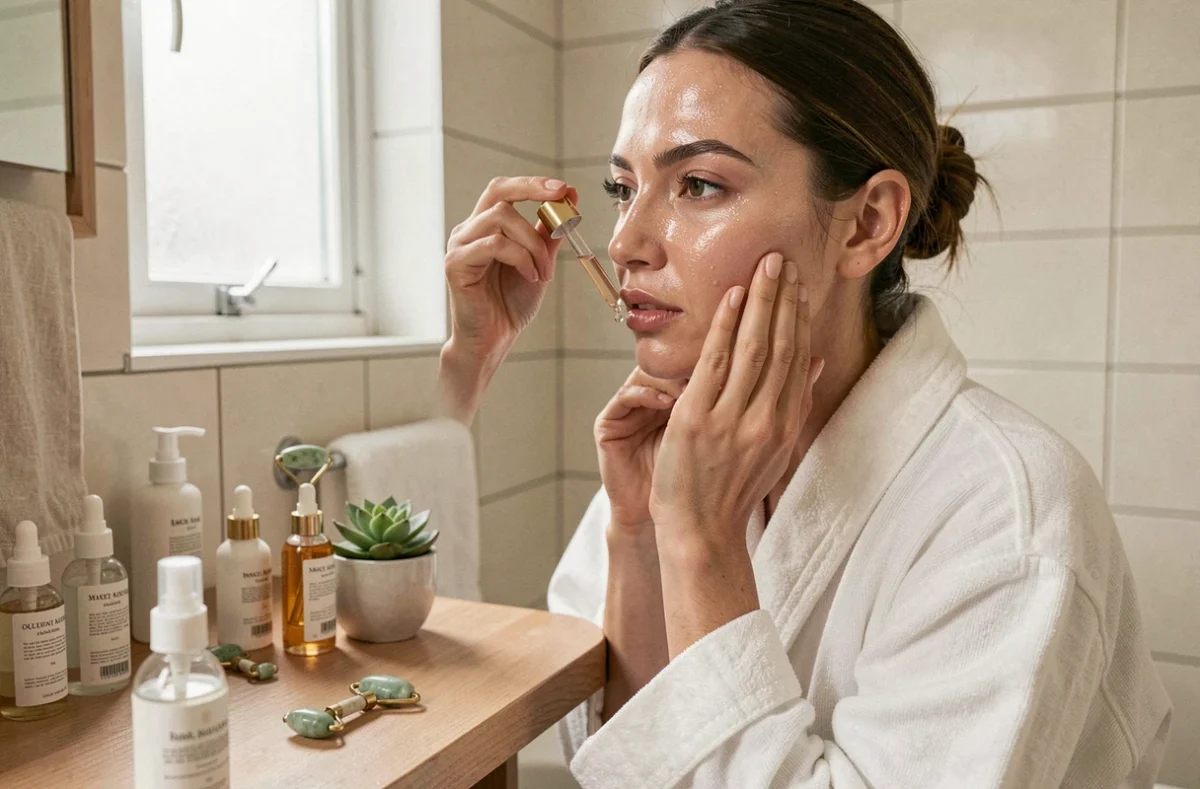
The cosmetic formulations of 2026 are evolving due to regulatory constraints and advances in skin biology. The beauty routines that work today are no longer the same as those from two years ago, and the reasons are more technical than aesthetic.
Restriction of microplastics and reformulation of textures in skincare
Regulation (EU) 2023/2055 imposes a phased timeline for the removal of microplastics in cosmetics. For rinse-off formulas (scrubs, cleansers), solid synthetic polymers are the first to disappear. Rinse-free products (creams, serums) will follow in the coming years.
The direct impact on the daily routine is tangible: textures are changing. Exfoliating microbeads made of polyethylene are being replaced by mineral or plant-based particles (apricot kernel powder, silica). The glide of certain face creams is also evolving, as film-forming polymers that provided a silky touch are gradually being replaced by bio-based alternatives.
For consumers, this means that a reformulated product may have a different sensory experience without a loss of efficacy. Testing the new version of a usual treatment before concluding that it “no longer works” helps avoid unnecessary routine changes. Current beauty trends can also be seen through these regulatory developments, and we recommend checking INCI lists to spot substitutions.
Several brands listed on the Planète Beauté website already feature formulas compliant with the new requirements, making it easier to curate a suitable skincare routine.
Cosmetics targeting the skin microbiome: distinguishing promise from proof
The skin microbiome is the most closely monitored area of innovation in skincare. Treatments based on prebiotics, probiotics, or postbiotics claim to rebalance the skin’s flora. The principle is appealing: nourish the “good” bacteria to strengthen the skin barrier and reduce inflammation.
Scientific research on the subject is progressing, but evaluation methods are not yet standardized. In practice, two “probiotic” serums from different brands do not necessarily act the same way, and the strains used can vary significantly.
To safely integrate this beauty trend into a facial routine:
- Favor products that specifically name the strain or postbiotic used on the packaging, rather than those that use a generic term
- Start with a single product targeting the microbiome and observe the skin’s reaction over four to six weeks before adding a second
- Avoid combining a powerful exfoliating active (concentrated glycolic acid, retinol) with a microbiome treatment on the same night, as aggressive exfoliation can disrupt the flora that the treatment aims to preserve
This category of treatments remains promising, but documented benefits mainly concern the soothing of reactive skin and the improvement of surface hydration.
Refillable beauty products: practical obstacles to be aware of
The shift to refillable containers is not just an ecological gesture. A Senseva-FEBEA study from June 2025 highlights several concrete barriers: compatibility between refills and original bottles is not always guaranteed, the availability of refills in stores remains limited, and the lack of information on the safe reuse conditions of the container persists.
From a daily routine perspective, this changes the logistics. A refillable pump bottle of face cream requires cleaning between refills to avoid bacterial contamination. Some materials (glass, anodized aluminum) withstand reuse cycles better than plastic, which can degrade and release residues.
Adopting refillables methodically means checking three points: does the manufacturer provide a cleaning protocol for the container, is the refill available in the usual distribution network, and is the packaging designed for a defined number of reuses. Without these guarantees, the gesture loses its relevance.
Hybrid treatments and skinimalism: formulating an effective facial routine with fewer products
Skinimalism is gaining ground for both technical and practical reasons. Multiplying actives increases the risk of undesirable skin interactions. A vitamin C serum layered over an AHA exfoliant and then a niacinamide treatment can cause irritations that each product alone would not have caused.
Hybrid treatments address this issue by combining multiple functions into a single formula: a tinted moisturizer with SPF, a serum combining hyaluronic acid and peptides, or a cleansing balm that also acts as a makeup remover. The goal is not only to save time but to reduce the number of interfaces between the skin and different formulas.
To build a minimalist skincare routine that holds up:
- A gentle cleanser (pH close to 5.5), morning and evening
- A single active treatment tailored to the main concern (pigmentation, dehydration, loss of firmness)
- A barrier cream in the morning with integrated sun protection, a repairing balm in the evening
- A gentle exfoliant once or twice a week, no more
Four products are enough to cover the needs of healthy skin. Adding a fifth is only justified in the face of an identified and persistent skin issue.
The beauty trends of 2026 converge towards a common axis: fewer steps, better-documented formulas, containers designed to last. The next reformulation of your usual cream will likely have more impact on your routine than any trendy new active.