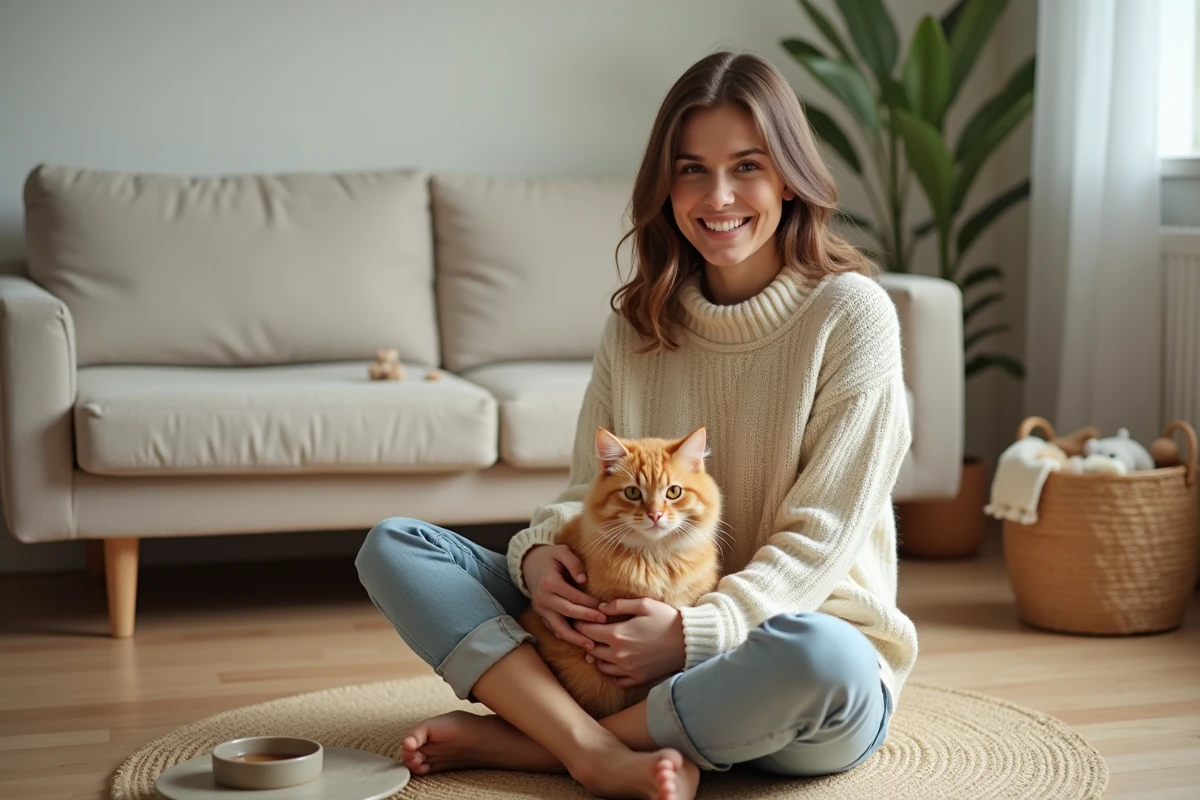
In France, since October 1, 2022, every new cat owner must sign a knowledge certificate reminding them of their obligations regarding care, identification, and prevention of abandonment. This measure, stemming from the law of November 30, 2021, against animal mistreatment, formalized what shelters have long recommended: to prepare one’s home concretely before the arrival of the animal.
Welcoming a cat is not just about buying a bowl and a litter box. Recent veterinary reports show that indoor living conditions directly influence the physical and mental health of felines.
Indoor Cat Stress: What Veterinarians Have Recently Noticed
Since 2023, practitioners have reported a marked increase in stress-related disorders among cats living exclusively indoors. Excessive grooming, idiopathic cystitis, and eating behavior disorders: these pathologies are no longer marginal in feline consultations.
The link with the sedentary lifestyle of apartment cats is now documented. A feline deprived of stimulation exhibits compulsive behaviors similar to those observed in captivity. Veterinary colleges now recommend environmental enrichment devices on par with litter and basic food.
Specifically, this covers several categories of arrangements that adopters often underestimate. To delve deeper into the specific needs of domestic felines, resources like the La Maison des Animaux website help better identify the appropriate equipment for each cat profile.
- High hiding spots (wall shelves, cat trees with platforms) that replicate the feline’s natural need for vertical observation.
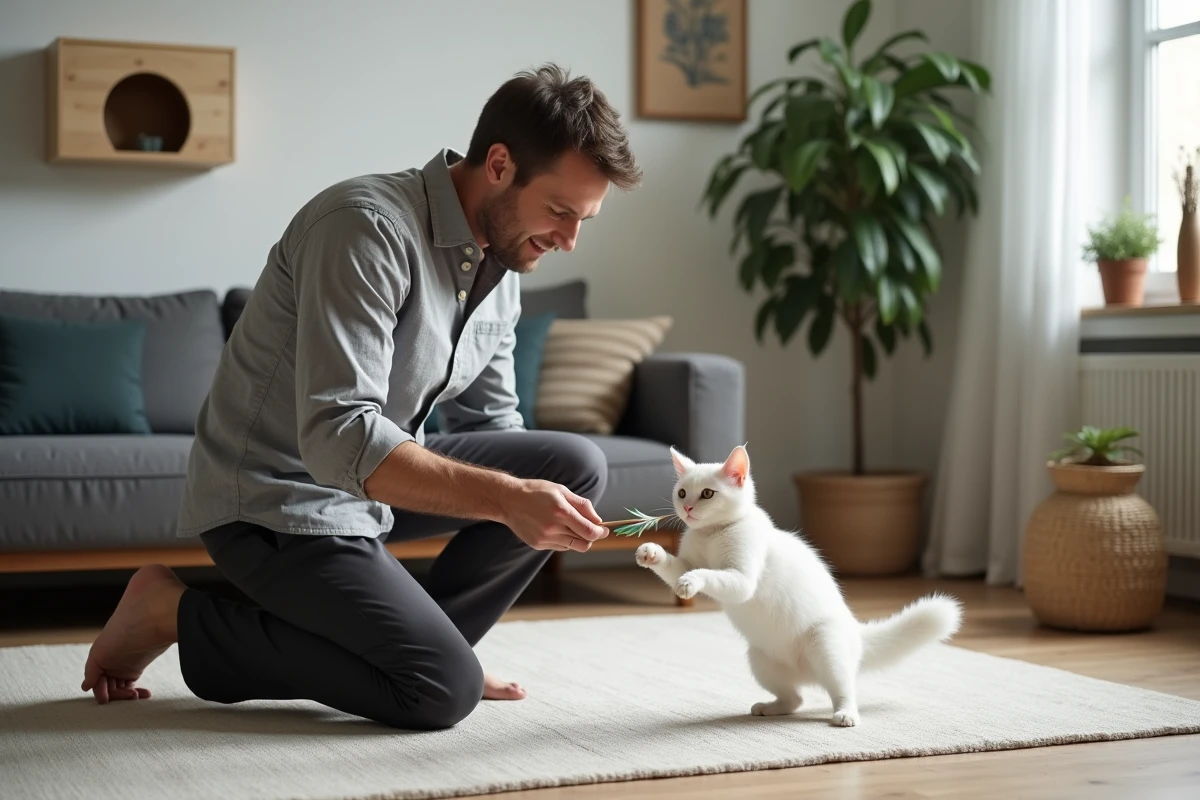
- Predatory play (fishing rods, feather toys) used daily for at least two sessions, to simulate the hunting-capturing-consuming sequence.
- Food puzzles or slow feeders that require the cat to “work” for its food and break the monotony of meals served in a bowl.
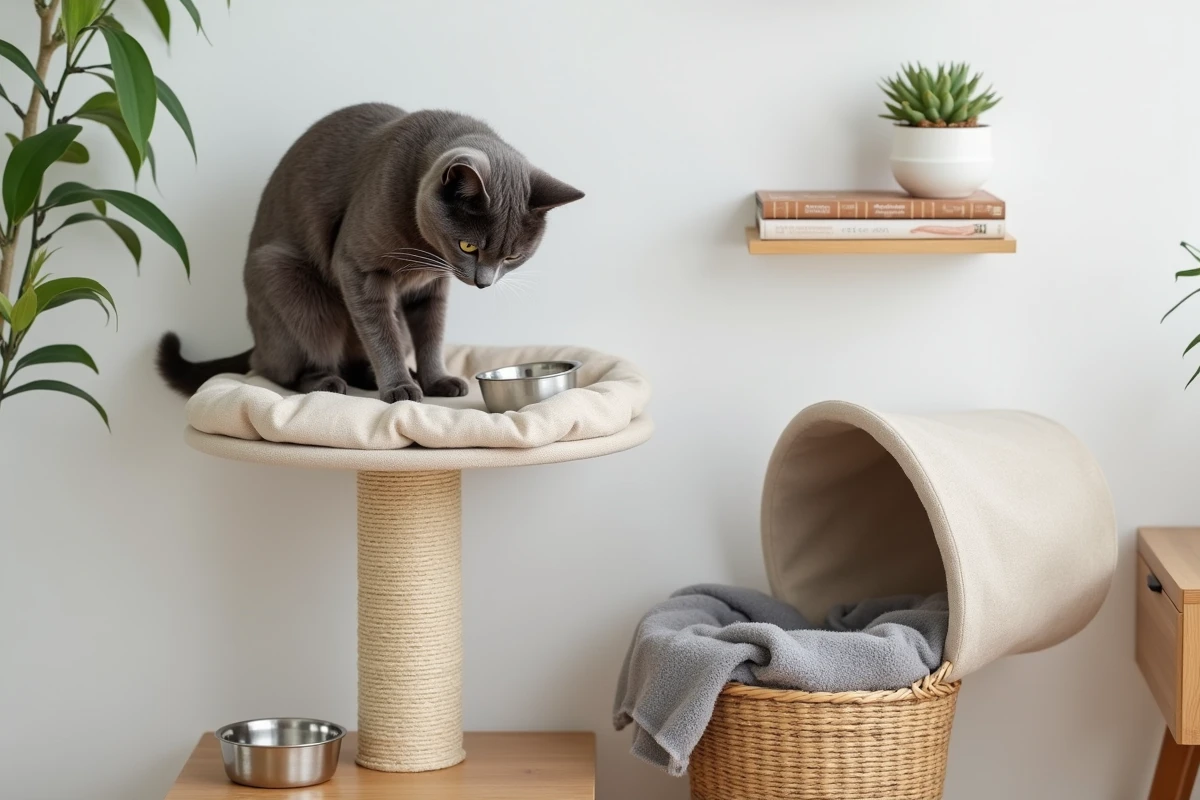
Environmental enrichment is not a luxury reserved for active breeds. A classic European cat, neutered, living in an apartment, has the same stimulation needs as a Bengal or an Abyssinian. Field reports vary on this point according to breeds, but the total absence of stimulation remains a risk factor for all profiles.
Cat Nutrition: The Trap of Remote Work and Emotional Overfeeding
Studies published between 2022 and 2024 document a significant increase in overweight and obesity among indoor cats. The correlation with remote work is direct: owners present all day multiply treats, share their meals, and give in to snacking out of affection.
This phenomenon has a name in veterinary literature: emotional overfeeding. The cat seeks attention, the owner interprets this request as hunger, and the cycle begins. Over several months, weight gain becomes difficult to reverse without veterinary assistance.
Free-Feeding Kibble: A Misguided Idea Depending on the Profile
The common belief that cats can self-regulate their intake needs to be nuanced. Some felines, particularly neutered or less active cats, do not regulate their food intake. The available data does not allow for a conclusion that free-feeding is suitable for all individuals.
On the other hand, a sudden rationing can generate stress and begging behaviors. Transitioning to a puzzle feeder or divided meals (four to five small portions per day) offers a compromise. Dividing meals reduces stress without promoting overweight.
Water remains a point of vigilance often overlooked. Cats naturally drink little, which promotes urinary problems. A water fountain, placed away from the food bowl and litter box, encourages regular consumption.
Litter and Living Areas: The Most Common Layout Mistakes
The majority of cleanliness issues in cats stem from inadequate arrangements rather than deep behavioral disorders. Three mistakes consistently arise in consultations.
The first: placing the litter box too close to the feeding area. A cat instinctively refuses to relieve itself near its food. The minimum distance between these two areas should be significant, ideally in separate rooms.
The second: providing only one box for multiple cats. The commonly accepted rule among feline behaviorists is one litter box per cat, plus one extra. In a household with two cats, this means three boxes, spread across distinct areas.
The third: choosing a covered box by default. Hooded models trap odors inside, which is convenient for the owner but deters some cats. If your feline scratches the floor around the box without entering it, the lid is likely the issue.
First Visit to the Veterinarian and Mandatory Identification
Identification by microchip is mandatory in France for all cats over seven months old. This obligation predates the 2021 law but remains unknown: a notable proportion of domestic cats are still not identified, which significantly complicates the chances of finding a lost animal.
The first veterinary visit should occur within days of adoption. It allows for a general health check, updating the vaccination protocol, and assessing parasitic status. For a kitten, the vaccination schedule spans the first months of life with regular boosters.
An early health assessment can detect congenital pathologies before they worsen. Certain breeds have genetic predispositions to heart or kidney diseases that only a clinical examination can identify early.
Neutering, recommended by almost all veterinarians for indoor cats, alters dietary needs and activity levels. It should be integrated into the overall consideration of the cat’s living environment, not treated as an isolated formality.
An indoor cat that is neutered without environmental enrichment accumulates two risk factors for overweight and urinary disorders, two of the most common reasons for feline medical consultations.