
Are you looking for an outing that breaks away from the usual cinema or restaurant, without having to travel to the other end of the country? Finding original activities close to home mainly requires knowing where to look. The main barrier is not the lack of options, but the lack of time to uncover them and the fear of ending up in a crowded place.
Local micro-adventures: original activities without hitting the road
The concept of micro-adventure is based on a simple principle: to experience something different within an hour from home, for a short duration. In practice, this could take the form of a one-night camping trip on the edge of a forest, an urban trail at sunrise, or a themed hike focused on the geology of an area.
The advantage is clear. No long journey, no complicated reservations, no crowds. These participatory formats are appealing because they fit into a time slot of a few hours or an entire weekend.
A good starting point is to explore the activities to discover on Sortie 24, which lists experiences based on your location and interests.
Do you live in the suburbs or in a rural area? The options differ from those offered in the city center, but are no less interesting. A basket weaving workshop with a craftsman, an introduction to beekeeping at a nearby farm, or a guided nature outing organized by a local association provide a real change of scenery just a few kilometers from your door.
Escape room, virtual reality, creative workshop: three formats to compare before choosing
Among the most sought-after activities, escape rooms, virtual reality, and creative workshops consistently come up. However, they do not cater to the same profiles, and confusing them often leads to a disappointing outing.
Escape room: ideal for a group of four to six people
The escape game operates on cooperation under pressure. Each person in the group has a role to play in solving the puzzles within the allotted time. It is a format that works well among friends or colleagues, as long as everyone agrees to participate actively.
Escape rooms have multiplied in recent years, including in medium-sized cities. The scenarios range from classic thrillers to local historical investigations, making the experience more rooted in a territory.
Virtual reality: an individual experience in a collective setting
Unlike the escape room, virtual reality offers a solitary immersion, even when going in a group. Each person wears their headset and experiences their own adventure. This disconnect can be surprising if you are looking for a shared moment.
The format is particularly suitable for children and teenagers, or for those who want to test an adrenaline rush (flight simulation, underwater exploration) without physical constraints.
Creative workshops: the format that leaves a mark
Pottery, cooking, cosmetics making, leatherworking: creative workshops have an advantage that the other two formats do not. You leave with an object you have made. This detail changes the perception of the outing, especially when taking children along.
To choose well between these three options, ask yourself these questions:
- How many people are participating, and what are their ages? An escape game does not work well with two people, and a pottery workshop often bores teenagers.
- Are you looking for an adrenaline rush or a calm moment? Virtual reality and the escape room stimulate positive stress, while the creative workshop promotes calm concentration.
- What budget per person are you willing to spend? Creative workshops often include materials, while a virtual reality session can vary significantly depending on the chosen duration.
Outdoor activities to try near you without specific equipment
Have you noticed that most lists of original activities assume a particular level of equipment or fitness? Skydiving, canyoning, or hot air ballooning are spectacular, but they do not fit a spontaneous outing on a Saturday morning.
Some outdoor activities require nothing more than a pair of sneakers and a bit of curiosity.
- Geocaching turns any park or forest into a playground. A free app is all you need to start searching for caches hidden by other participants.
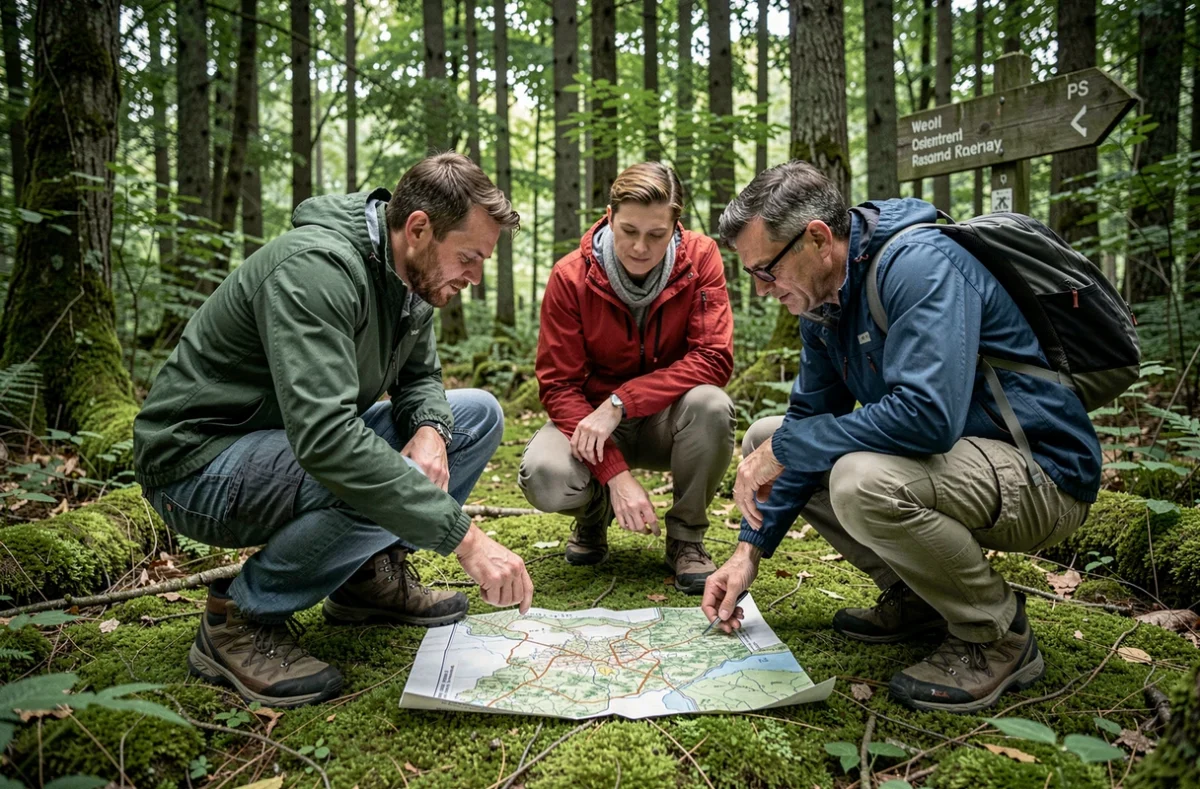
- Marked orienteering courses exist in many municipalities, often unknown even to the residents themselves. Check with your local tourist office.
- Mushroom or botany outings organized by naturalist associations combine concrete learning and nature walks, without high registration fees.
- Disc golf, set up in an increasing number of urban parks, can be played freely and is suitable for both solo and group play.
Prioritize activities with clearly stated durations. A two-hour activity, accessible by foot or public transport, overcomes the time constraint much more effectively than a full day of planning.
Adapting the choice of activity to its context: city, suburbs, countryside
Residents of large urban centers have greater access to escape rooms, virtual reality rooms, and various workshops. This concentration of offerings can create the impression that suburban or rural areas are less well-off.
The reality is more nuanced. In the suburbs, educational farms, leisure centers, and nature trails effectively replace indoor activities. The decisive criterion is not the originality of the activity, but its compatibility with your daily life: travel time, schedules, minimum number of participants.
In the countryside, local participatory formats (workshops with artisans, visits to microbreweries, stone carving courses) offer an authenticity that large urban leisure brands cannot replicate. These experiences deserve to be sought directly from municipal or inter-municipal tourist offices, which list them better than national platforms.
The best reflex for finding an original activity is to start with a limited perimeter. Twenty kilometers around your home is often enough to discover proposals that you were unaware of, provided you search in the right places and filter by duration, accessibility, and group size.