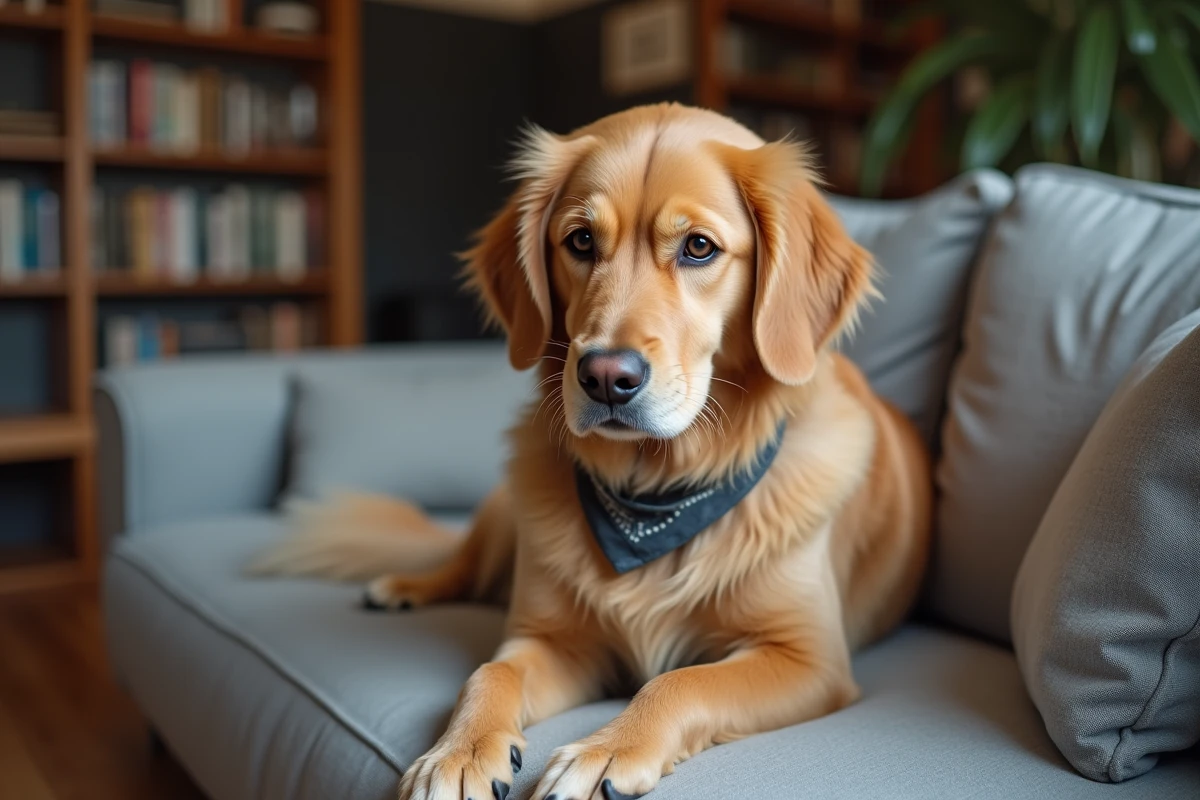
An usually hyperactive poodle that remains huddled in a corner after grooming, a Coton de Tulear that refuses its bowl on the night of the session, an Australian shepherd suddenly becoming clingy: these behavioral changes are common. Rather than wondering if the dog is “sad,” the useful question focuses on the specific moment of the session that generates distress, and on the signals that help identify it.
Drying, restraint, noise: identifying the step that triggers the dog’s stress
Discussions among owners and feedback from groomers converge on one point: not all dogs react the same way during the grooming process. Some tolerate the bath but panic at the dryer. Others can handle the noise but not prolonged restraint on the table.
Several specialized sources describe drying as the most critical step for triggering a rise in stress. The hot air blast, the noise of the blower, and the inability to escape combine to create a sensory overload that the dog cannot manage through fleeing or avoidance.
A detailed article explains why a dog is depressed after grooming on Animal News, pointing out the accumulated nervous fatigue during the session as the main factor for the observed behavioral change afterward.
The problem is that owners notice the result (a dejected or agitated dog upon returning) without knowing which step caused the shift. To determine this, one must observe the dog during the session, not just afterward.
| Grooming Step | Main Stimulus | Common Dog Reaction | Distress Signs to Spot |
|---|---|---|---|
| Bath | Contact with water, handling | Attempt to flee, trembling | Rapid panting, fixed gaze |
| Drying with blower | Loud noise, hot air blast | Backing away, vocalizations, stiffness | Ears pinned back, low tail |
| Restraint on table | Prolonged immobilization | Agitation then resignation | Whale eyes (visible whites) |
| Clipping / trimming | Vibrations, contact with blades | Startles, lip licking | Repeated yawning, head turning away |
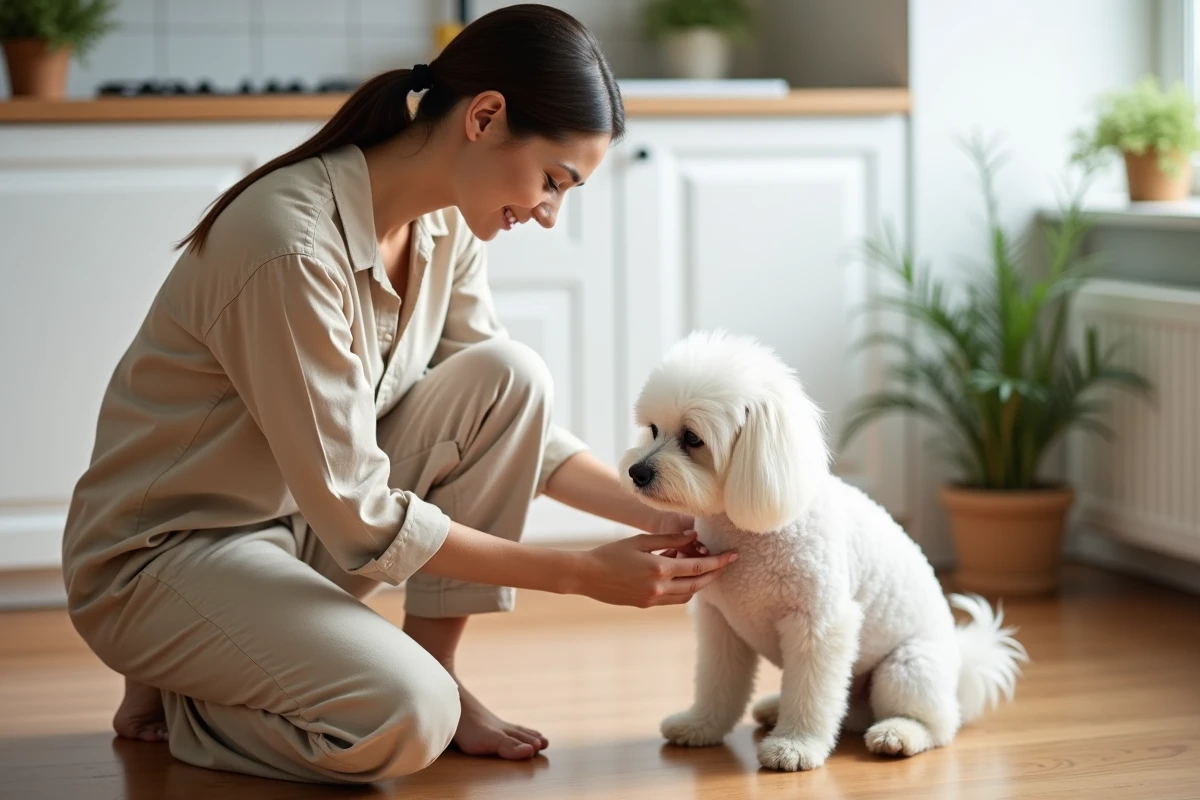
Dog behavior after grooming: fatigue or real distress
The distinction between a tired dog and a distressed dog is rarely made. An animal that sleeps for an hour after a two-hour session and then resumes its normal activity does not have the same profile as a dog that refuses to eat, remains huddled, or conversely, goes into uncontrollable “zoomies.”
Post-grooming zoomies are not a sign of joy. This burst of energy reflects the release of stress accumulated during the session. The dog releases its endorphins after being forced to remain still, sometimes for over an hour.
The signs that distinguish normal fatigue from a deeper stress response:
- A loss of appetite that extends beyond the meal following the session, with a dog that turns its nose up at its bowl the next morning
- A withdrawal behavior that persists beyond a few hours (the dog refuses interactions, hides, or avoids physical contact)
- A lasting change in behavior between sessions: the dog becomes clingier, more anxious during car rides, or refuses to enter the grooming salon on the next visit
- Digestive issues (diarrhea, vomiting) in the hours following, linked to the gut-brain axis activated by cortisol
This last point deserves particular attention. The link between stress and digestive issues in dogs is documented: the intestinal microbiota changes in a stress context, which can cause diarrhea on the table or in the following hours. This is not a cleanliness issue; it is a physiological reaction to stress.
Individual tolerance threshold: why some dogs recover quickly and others do not
Field reports show considerable variations between animals. A dog accustomed to grooming from a young age, gradually exposed to the noise of the dryer and restraint, generally recovers within a few hours.
In contrast, a dog whose first grooming experience occurred in adulthood, or whose initial session went poorly, may develop a lasting negative association with the salon. Each new visit then reactivates the memory of distress, and the tolerance threshold decreases instead of increasing.
Several factors influence this individual threshold:
- Breed and temperament: dogs with high sensory sensitivity (poodles, Cavalier King Charles, shepherds) react more to noises and vibrations
- The age of first exposure: a puppy exposed between three and four months adapts more easily than an adult dog discovering grooming
- The duration of the session: a two-hour session challenges the emotional regulation capacity well beyond what many dogs can handle without consequence
Adapting the session to the dog, not the other way around
Breaking grooming into shorter sessions allows staying below the tolerance threshold. A bath alone one week, then trimming the following week, reduces the cumulative sensory load.
Observing body language during the session (and not just behavior at home) remains the only reliable way to know if a dog associates grooming with a negative experience. A dog that freezes on the table is not cooperating; it is resigning. The difference between the two determines what it will express once back home.
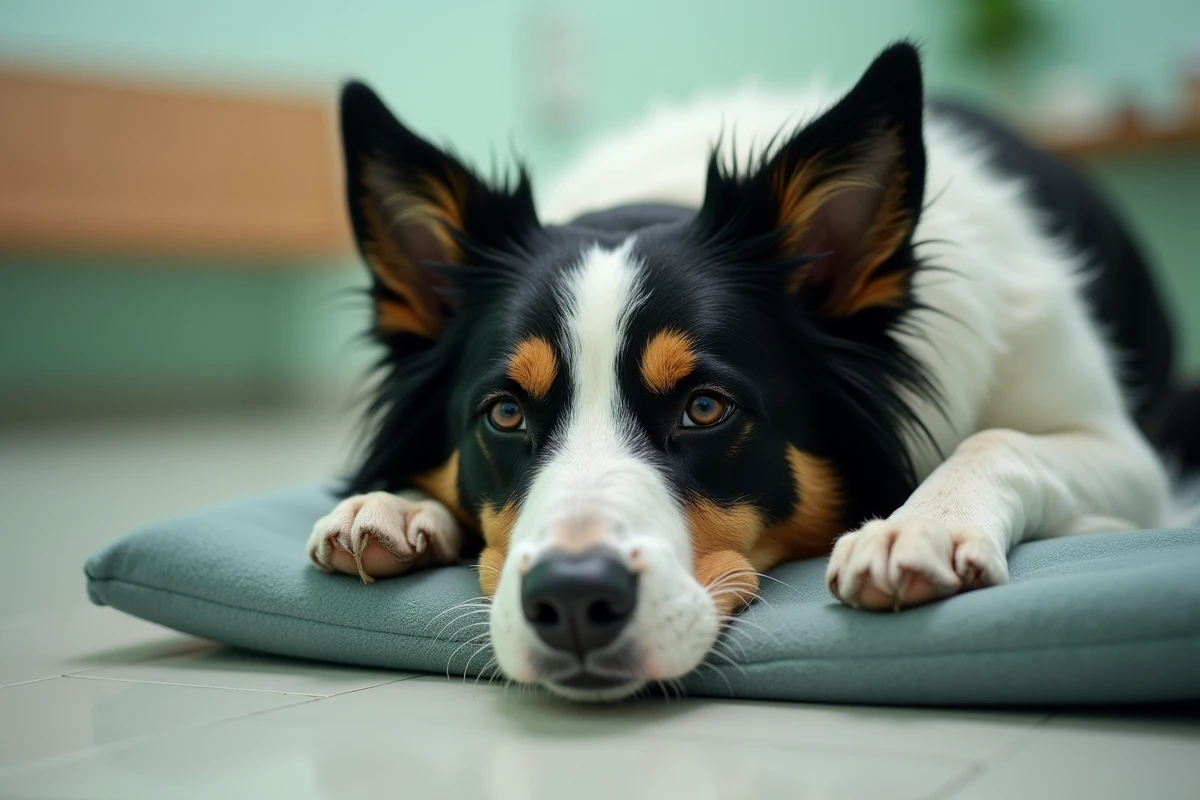
The post-grooming behavior of a dog acts as a delayed indicator: it reveals what happened during the session, not what happens afterward. Consulting a veterinary behaviorist becomes relevant when symptoms of depression or anxiety persist beyond the day, or when the dog shows signs of increasing avoidance at each new session.