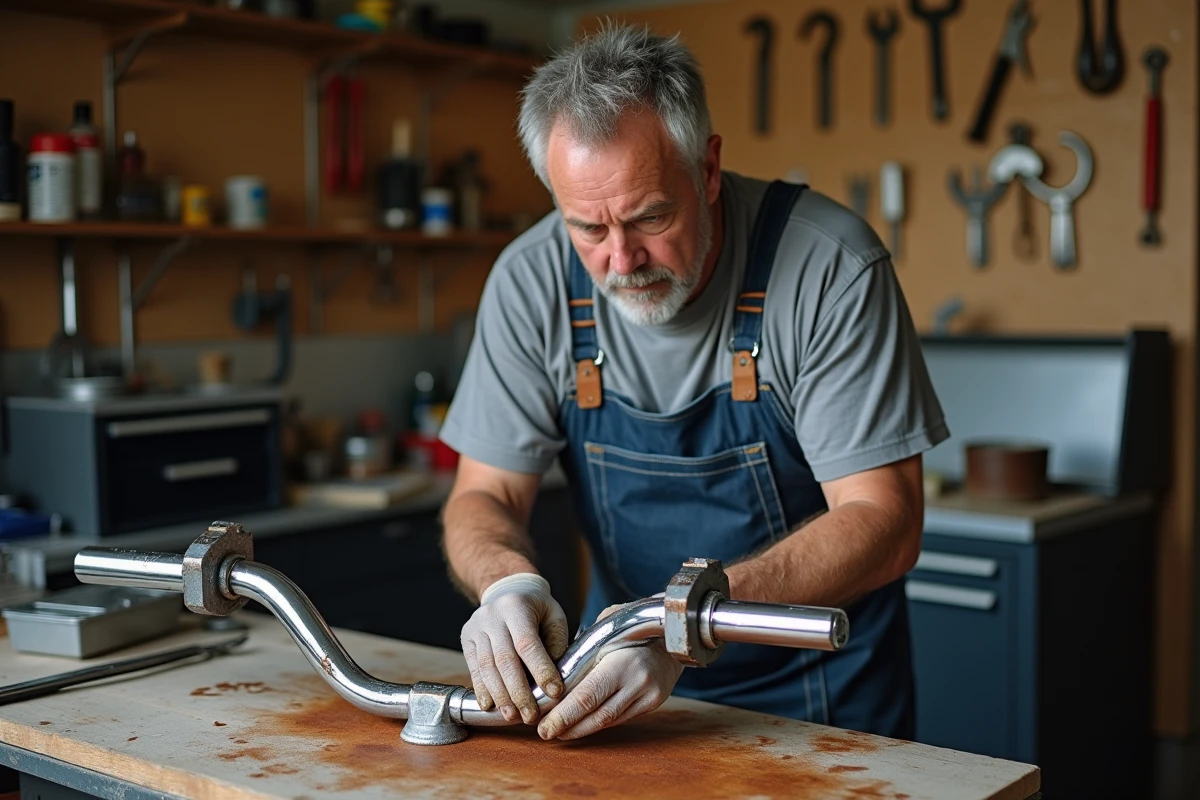
The rust that appears on chrome-plated metal does not attack the chrome itself, but the underlying metal (steel, iron) exposed by micro-defects in the coating. Chrome is a thin electrolytic deposit, often just a few microns thick, that protects the underlying metal from oxidation. As soon as a scratch, chip, or porosity breaches this layer, moisture reaches the substrate and rust forms from underneath, gradually lifting the surrounding chrome plating.
Why rust attacks chrome from underneath
Understanding this mechanism changes the approach to cleaning. Rust on chrome always arises from a breach in the coating, not from oxidation of the chrome on the surface. This is why aggressive scrubbing with steel wool or iron filings worsens the problem: the visual result may seem fine for a few weeks, but the micro-scratches created by the abrasive become new starting points for corrosion.
Motorcycle and bicycle restoration professionals increasingly advise against using these abrasive tools on chrome. The goal is to remove the oxide without further damaging the protective layer, which leads to gentle or chemically targeted methods.
Before any intervention, it is also necessary to assess the extent of the damage. Isolated rust spots are easy to treat. Chrome that is blistering or lifting in patches indicates a largely corroded substrate, and no household trick will restore the lost chrome deposit. In this case, only professional re-chroming can restore the part.
For further information, several tips for removing rust from chrome also detail the thresholds beyond which home treatment is no longer sufficient.
Aluminum foil and water: the gentle method for surface rust

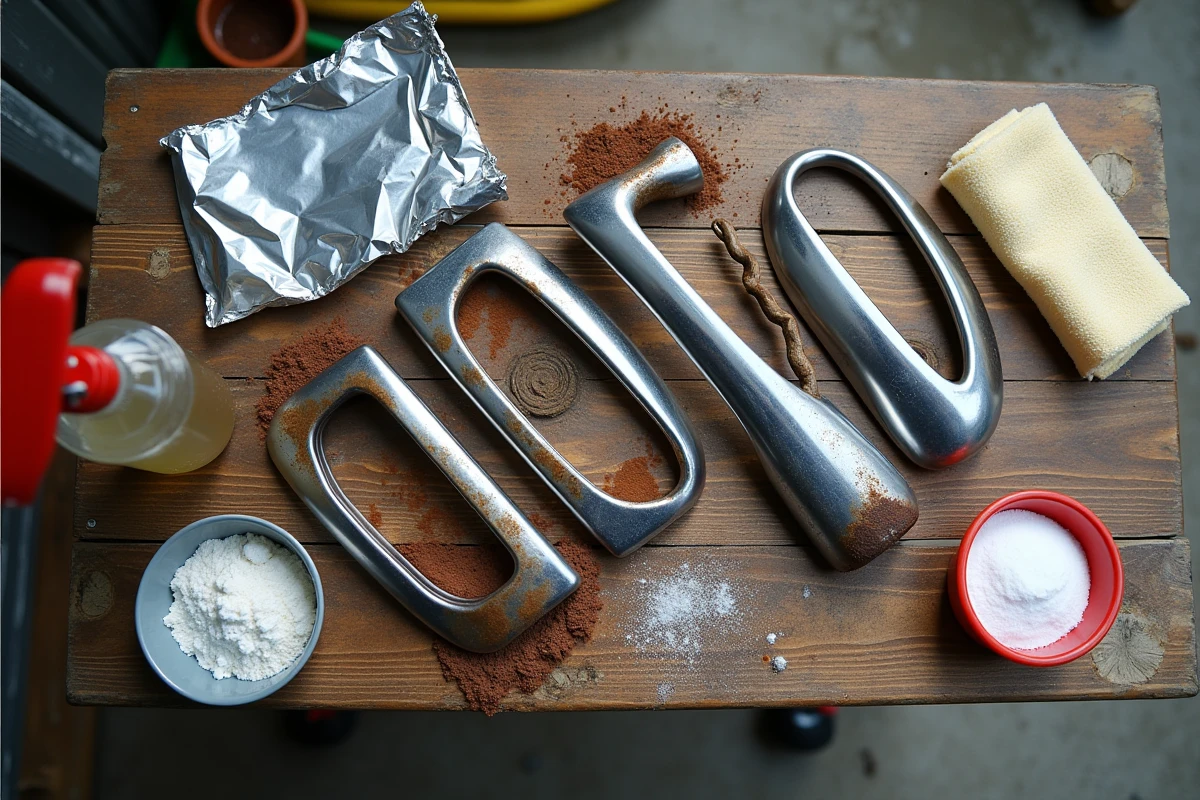
Crumbled aluminum foil, soaked in water, remains the simplest technique for treating light rust spots on chrome. Aluminum is softer than chrome, which prevents scratching the coating. In contact with water and iron oxide, a redox reaction occurs: aluminum reduces iron oxide and produces alumina, a very fine gray powder that acts as a gentle polish.
The technique involves rubbing in small circular motions, without applying too much pressure. The gray paste that forms is normal: it is the mixture of alumina and dissolved iron oxide. After a few passes, wiping with a microfiber cloth reveals the cleaned chrome.
This method works on bumpers, rims, bicycle handlebars, and faucets. It is not suitable for parts where the chrome is already lifted or flaking, as it has no restorative power for the coating.
White vinegar and lemon juice: mild acids but to be used with caution
White vinegar and lemon juice dissolve iron oxide due to their acidity. Application can be done with a cloth or through short soaking for small parts. The contact time should not exceed a few minutes on chrome, as an acid left too long also attacks the nickel beneath the chrome, causing irreversible pitting.
Several sanitary manufacturers, including Grohe and Hansgrohe, specify in their maintenance instructions that the use of concentrated vinegar or strong acidic descaling products on chrome surfaces voids the warranty. The risk involves pitting and delamination of the chrome. Therefore, it is essential to rinse thoroughly with clear water after each application, then dry immediately.
Rust converter on chrome: stabilize without stripping
When rust spots are located under the edge of the chrome or on hard-to-dismantle parts (hinges, furniture fasteners, old bodywork), mechanical stripping may do more harm than good. Classic car restoration workshops have favored a different approach in recent years: tan-based rust converters.
These products transform iron oxide into a stable compound, iron tannate, which halts the progression of corrosion. The visual result is a dark, matte surface in the treated areas, which is not bothersome in non-visible areas or before a paint touch-up. On visible chrome, the converter is reserved for small localized spots that can then be covered with a protective wax.
The advantage of this method is that it does not remove material. The chrome still adhering around the rusted area remains intact, which prolongs the lifespan of the part without re-chroming.
Chrome polishing products: selection criteria and pitfalls to avoid
Chrome-specific polishing products combine an ultra-fine abrasive with protective agents. Some recent formulations incorporate nanoparticles that fill the micro-porosities of the coating after polishing, slowing the reappearance of corrosion.
To choose a suitable product, here are the criteria to check:
- The grain size of the abrasive should be labeled as “non-abrasive” or “ultra-fine” – a product designed for painted bodywork does not have the same formulation as a chrome polish
- The presence of a protective agent (wax, silicone, nano-coating) that remains after polishing and delays the next oxidation
- The absence of hydrochloric acid or aggressive solvents, which damage the chrome plating instead of preserving it
A quality chrome polish cleans and protects in one operation. Apply the product with a microfiber cloth, never with an abrasive pad. Work in small areas, without allowing the product to dry on the surface.
Protecting chrome after treatment: slowing the return of rust
Once the rust is removed, the treated area remains vulnerable as the chrome is thinned or absent. Without protection, corrosion returns within weeks in a humid environment.
Actions that make a difference:
- Apply a layer of chrome wax or carnauba wax after each cleaning, focusing on areas that were previously rusted
- Always dry chrome surfaces after exposure to water (rain, washing, bathroom condensation)
- Store removable chrome parts (bicycle accessories, tools) in a dry place, away from direct moisture
Immediate drying after contact with water remains the most effective preventive measure. Stagnant water in corners, joints, and screws is the primary cause of rust returning on chrome metal.
On highly exposed parts (outdoors, seaside, unheated garage), renewing the wax layer every two to three months maintains the protective barrier. Well-maintained chrome retains its shine for years, provided that each rust spot is treated as soon as it appears, before it spreads beneath the coating.