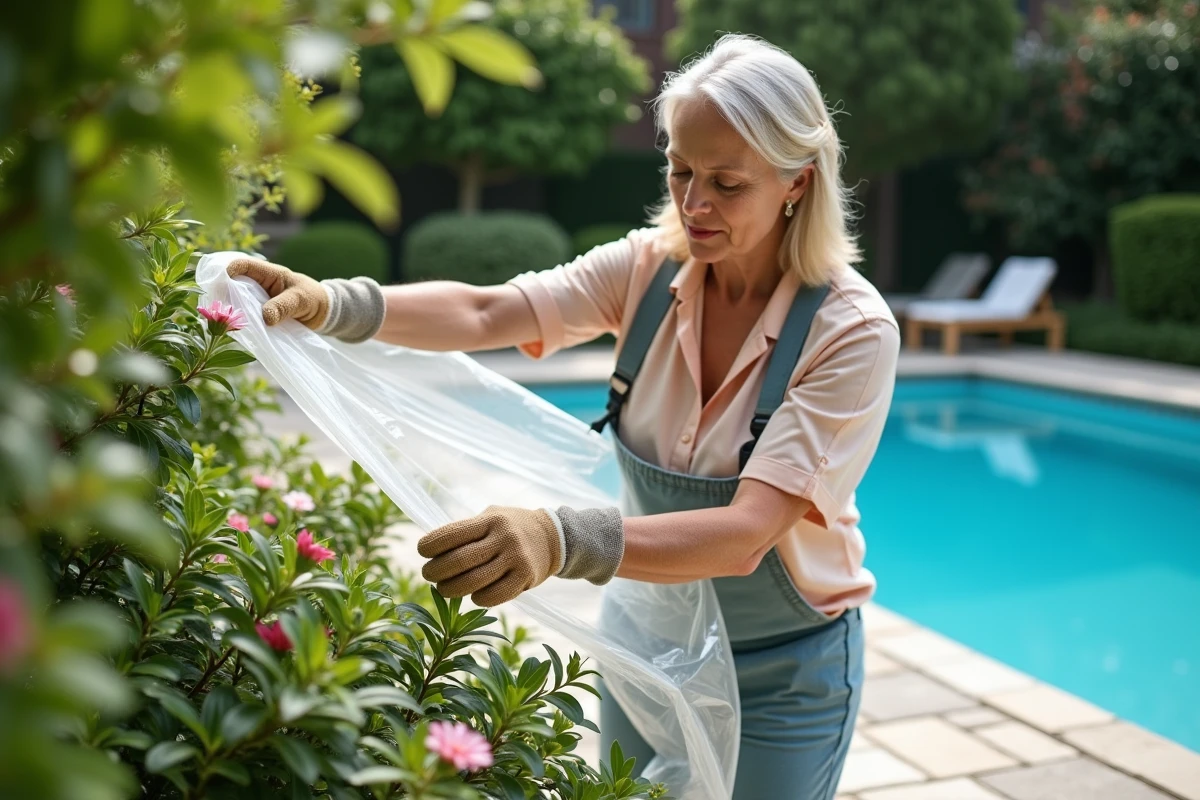
A simple liter of chlorinated water spilled by mistake does not only alter the purity of the pool: it can also disrupt the life of an entire garden bed. Over the weeks, innocuous splashes gradually eat away at the vitality of the hedges, dull the flowerbeds, and slow down the growth of young plants within reach of the pool.
Fortunately, there are concrete and proven strategies to maintain the balance between chemical treatment and vegetation. Some species will withstand an occasional splash without flinching, while thoughtful landscaping can help anticipate the risks associated with pool maintenance.
Chlorine in pool water: what real impacts on garden plants?
Chlorine, a formidable ally of pool cleanliness, becomes a troublemaker when it ventures outside the pool. Delicate foliage, ornamental grasses, lush lawns: all are at risk if splashes become frequent. Gradually, the affected plants weaken. Lawns lose their luster, foliage becomes stained or yellowed, some flowerbeds lag behind, and sometimes, necrosis sets in. Even a small amount of chlorinated water, drop by drop, is enough to leave visible and even irreversible marks on fragile species.
And the soil does not redeem the mistakes. With constant exposure, its structure deteriorates: microorganisms disappear, root systems weaken, and the ability to nourish vegetation shrinks. In a lawn, sparse patches quickly become noticeable; on hedges or young shoots, the foliage pales or shrivels, and everything slows down.
Different sensitivities depending on the plants: varieties with tender leaves, low ground covers, and young plants are often the first victims. Some Mediterranean species or robust shrubs, on the other hand, better withstand repeated assaults from chlorinated products.
To truly adapt your practices and limit risks without sacrificing either the pool or the garden, rely on the practical advice from iDéco Maison: dosage recommendations, species guidelines, concrete solutions to reconcile swimming and sustainable vegetation.
How to design a vegetated area safely around the pool?
Anticipating the impact of pool treatment means intelligently designing the space around it. The choice of plants, their placement, and even the soil layout contribute to the garden’s resilience. Some species will withstand occasional splashes. Among them: oleander, agapanthus, palms, grasses with thick foliage… In terms of robustness, it’s hard to do better for the immediate surroundings of the pool.
Here are recognized solutions to protect flora from chlorine:
- Establish a buffer zone: a paved path, stone slabs, or a wide band of pebbles act as a screen between the pool and the neighboring flowerbeds. This limits direct runoff onto the soil and protects the roots.
- Use mulch, either mineral or organic, which preserves moisture, reduces the volatilization of chemicals, and promotes soil life.
- Leave enough space between the coping and the plantings, which significantly decreases splashes on the foliage and on the soil itself.
For areas close to the pool, certain ground covers like lippia or creeping thyme work wonders. They create a resilient mat, absorb small amounts of chlorine from splashes, and limit soil evaporation. Other options like perennial geraniums enhance biodiversity while making the pool’s perimeter pleasant and easy to maintain.
A well-thought-out combination of evergreen and deciduous foliage enlivens the atmosphere, season after season. Before planting, carefully examine the garden’s orientation, soil type, and frequency of pool use: these factors naturally guide the right choices for a sustainable and balanced environment.
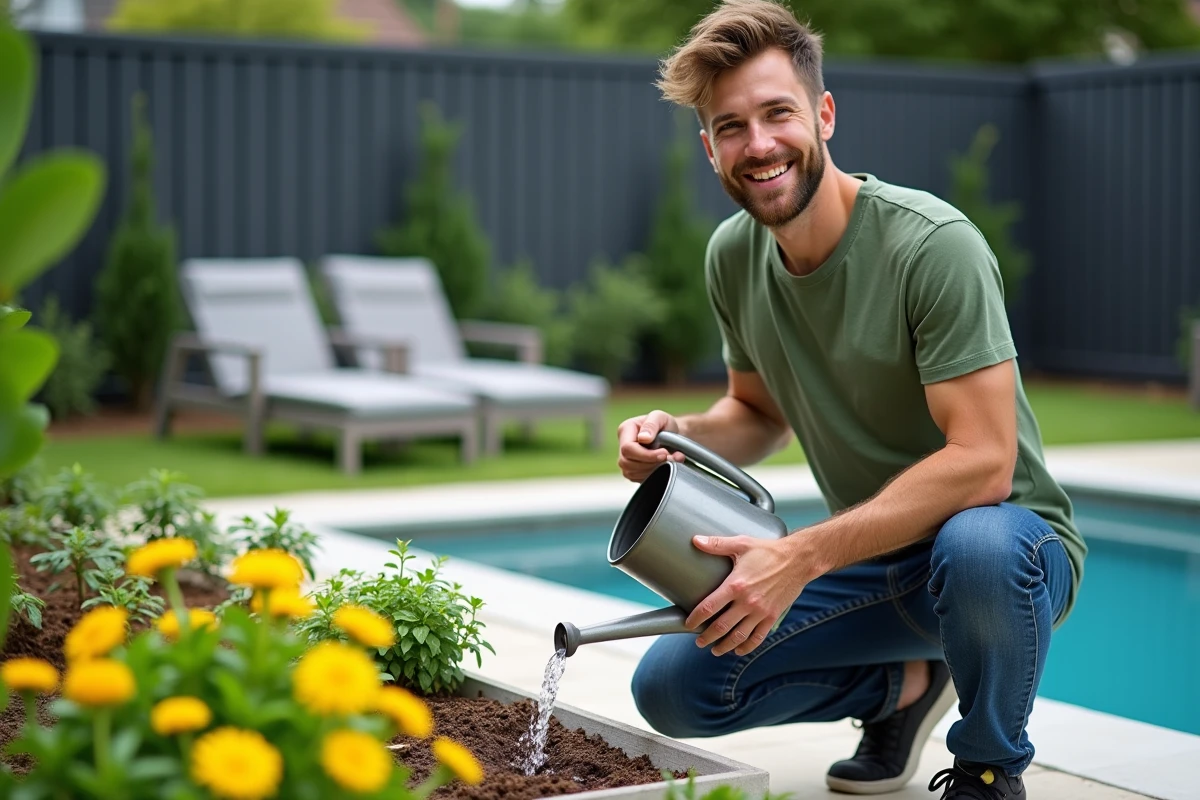
Consulting a landscape expert: when and why consider this solution?
Organizing the landscape around a pool exposes one to specific constraints. The involvement of a professional experienced in these issues helps avoid mistakes in choice or association. A landscape designer observes the terrain, identifies sensitive areas, analyzes soil quality, distinguishes varieties to prioritize based on exposure to splashes, and imagines tailored solutions suited to your living environment.
Here are common situations where an expert’s opinion can make a difference:
- Sloping terrain or topography making water management difficult
- Old pool needing renovation, requiring adaptation of the surrounding garden to limit risks and improve aesthetics
- Recurring problems with runoff or water stagnation around the pool, risking exacerbating the effects of chlorine
Entrusting the landscaping to a professional means betting on a resilient plant palette, materials chosen for their durability, and a comprehensive plan that considers watering, comfort, circulation, and visual appeal throughout the year. This approach offers a garden capable of enduring the seasons without losing its charm, even under the strain of chlorinated treatments.
Successfully cohabiting between the pool and flowerbeds opens the door to a space where nature still imposes its colors and rhythms. Season after season, it promises a vibrant decor that yields nothing to monotony or the randomness of a chlorinated slip-up. And if, tomorrow, a hedge or a flowerbed seems to want to give up, there will always be the possibility to rethink the balance, so that surprise and pleasure prevail, summer and winter alike.